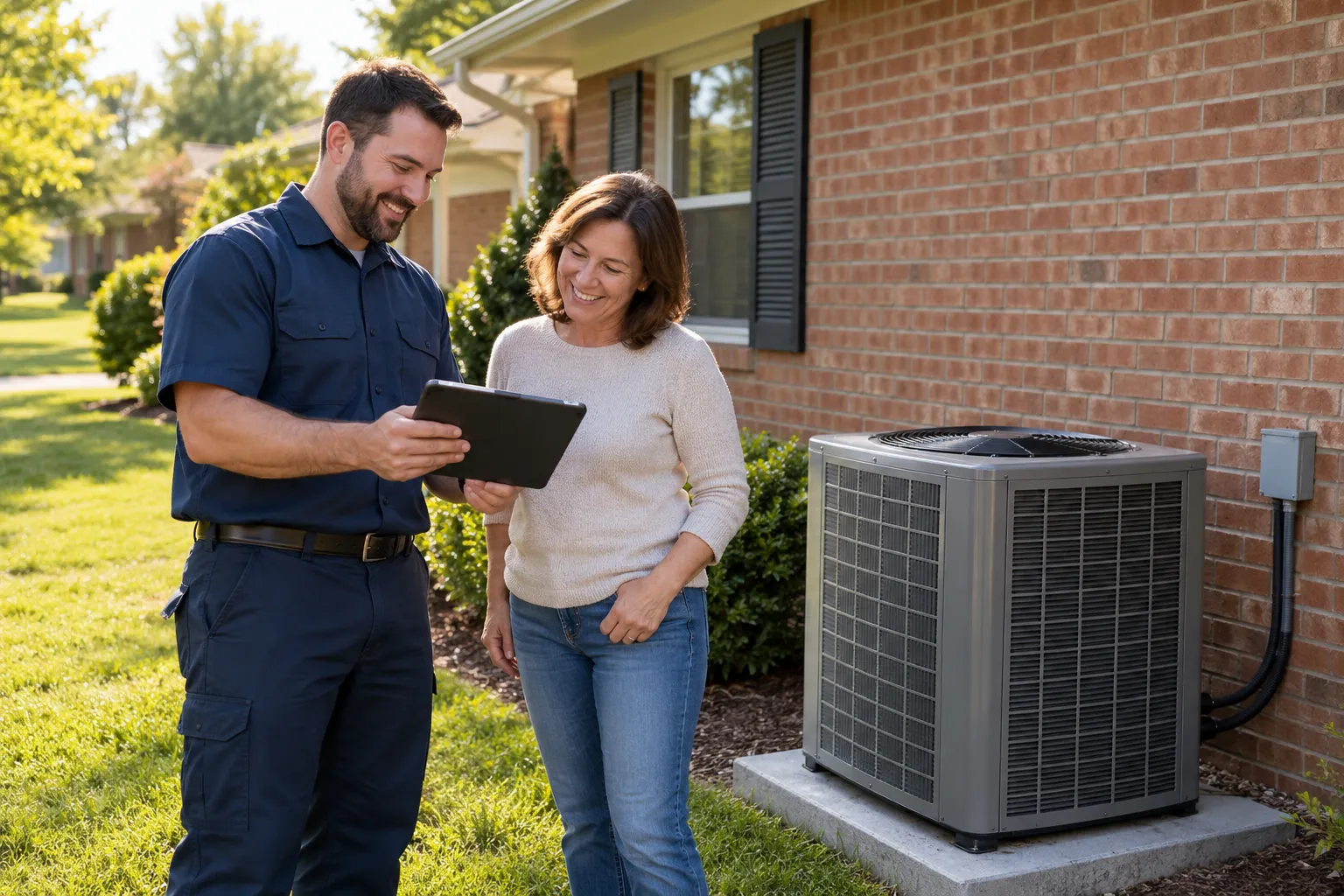
Engineeranime Heating & Air is a referral service. Engineeranime Heating & Air does not install air conditioners. Instead, Engineeranime Heating & Air listens to your situation, then connects you with an independent HVAC provider in our network who serves the Frisco area.
The provider looks at your home, your current system, and your cooling needs. Then they give you a written quote for a new unit. You decide if it fits. There is no obligation to hire anyone.
Our job is the connection. The provider's job is the sizing, the install, and the warranty paperwork. We keep the roles clear so you always know who you are dealing with. You can also ask the provider questions about unit types, efficiency, and what the quote includes before you make any choice.
Start Here: Who Does What
First, a plain statement. Engineeranime Heating & Air does not install or replace air conditioners. Independent local providers do that work. Engineeranime Heating & Air listens to your problem and makes the connection.
Referral, not repair. That is the whole model.
Step 1: Decide If Replacement Is on the Table
Look, note, then ask. Check these four things first:
- Age. Many systems wear out after 10 to 15 years of hard use.
- Repair history. Two or three repairs in a short span add up.
- Comfort. Hot rooms, weak airflow, and damp air are warning signs.
- Bills. A steady rise in cooling bills with no change in habits.
If two or more apply, ask a provider whether replacement makes more sense than another repair.
Signs the Unit Is Near the End
Write down what you see and hear. A provider can use your notes.
- Loud grinding, banging, or squealing
- Ice on the lines or the outdoor unit
- Water pooling near the indoor unit
- A system that runs all day and still cannot cool the house
- Rust or oily residue near the outdoor coil
- A refrigerant type that is being phased out and is harder to find
In hot, humid summers, a unit that struggles in July may quit in August. Cooling systems tend to fail when the load is highest.
What Happens if You Wait
Here is the usual timeline of a failing system.
- First days: Longer run times and weaker cooling. Easy to ignore.
- Next weeks: Higher bills, more humidity indoors, and a musty smell.
- Then: The compressor or another major part fails during a heat wave.
At that point, many homeowners must pick a system in a rush. Planning ahead gives you time to compare quotes. Many providers can respond quickly, but availability varies, so request a callback to check provider availability.
Types of Cooling Systems
A provider may talk about these options:
- Central split system. An outdoor unit plus an indoor coil. Common in ranch homes.
- Heat pump. Cools in summer and heats in the mild winter. Works well where hard freezes are rare.
- Packaged unit. All parts in one outdoor cabinet.
- Ductless mini-split. Good for additions or homes with no ducts.
Pick based on your home, not on a brand pitch.
Why Sizing Matters
Bigger is not better. An oversized unit cools fast, shuts off, and leaves the air sticky. That is a real issue in humid weather.
A unit that is too small runs nonstop and still falls short.
Ask the provider how they sized the system. A good answer mentions your home's square footage, insulation, windows, and ducts. Hot attics and slab-on-grade floors change the math.
What an Installation Usually Includes
Scope varies by provider. Ask for this in writing:
1. Removal of the old equipment 2. Setting the new outdoor unit on a pad 3. Connecting the indoor coil and line set 4. New refrigerant, electrical, and drain connections 5. A check of the ducts for leaks 6. Thermostat setup and a test run
Some jobs also need a new pad, a drain pan, or duct repairs. Those should appear on the quote.
Matching the System
The indoor and outdoor parts should work as a pair. Mixing old and new parts can cut performance. Ask the provider if the coil, the air handler, and the thermostat will match the new outdoor unit.
If your ducts are old, leaky, or crushed, even a brand-new unit will still struggle.
Efficiency in Plain Terms
Efficiency is shown by a SEER rating. A higher number means less power used for the same cooling. Higher-rated units often cost more up front. They may cost less to run, especially in a long cooling season.
Ask the provider to compare two or three models. Ask what the yearly running cost might look like for your home.
Questions to Ask the Provider
- Is the quote in writing, with parts and labor listed?
- How did you size the unit?
- What is covered by the parts warranty, and what by the labor warranty?
- Who pulls permits, if needed?
- What happens to the old unit?
- How long will the job take?
Storm Season Notes
Heavy downpours and tropical storms can flood or damage outdoor units. Ask about a raised pad. Ask how the unit is secured. Some policies may cover sudden storm damage, so check your policy. Providers can often help document damage for a claim.
Next Steps
First, gather your notes. Next, use the request form to ask for an estimate. Then compare the written quotes. Take your time, but do not wait for a heat wave to decide.
What's Included
Old Unit Removal
The provider disconnects and hauls away the worn-out equipment as part of the agreed scope.
New Equipment
A matched outdoor unit and indoor coil, chosen for your home's size and layout.
Connections Check
Electrical, drain, and refrigerant lines are connected and checked for leaks.
Startup Test
The provider runs the system, sets the thermostat, and walks you through it.
Typical Replacement Cost Ranges
These are typical U.S. ranges. Real prices vary by home, equipment, and job scope. Always get a written quote from the provider before you agree to any work.
| Item | Typical range | Notes |
|---|---|---|
| Central AC replacement | $5,000 – $12,000 | Depends on size and efficiency |
| Heat pump system | $6,000 – $14,000 | Heats and cools |
| Ductless mini-split | $3,000 – $8,000 | Per zone, varies by count |
| Outdoor condenser only | $2,500 – $6,000 | Only if the indoor coil matches |
| Ductwork repair or sealing | $500 – $3,000 | Depends on access and condition |
| New thermostat | $150 – $500 | Smart models cost more |
How It Works
Check and Note
Write down the unit's age, the symptoms, and any recent repairs before you reach out.
Call or Request
Request a callback or use the request form to describe what is going on.
Get Connected
Engineeranime Heating & Air routes you to an independent local provider who can quote the work.
Compare and Decide
Review the written quote, ask your questions, then choose with no pressure.
Why Call Engineeranime Heating & Air
Clear Referral Model
We say it plainly: providers do the work, and Engineeranime Heating & Air makes the connection.
Local Providers
You are matched with independent providers who serve the Frisco area.
No Obligation
Request an estimate and compare. You choose whether to hire anyone.
Written Quotes
Ask the provider to put scope and price on paper before work starts.
Other Services
Need ac installation & replacement in Frisco?
Tell us what your system is doing. Request an estimate and a local provider in our network will follow up with next steps and a written quote.
No obligationAC Installation & Replacement FAQ
How do I know if I need a new AC or just a repair?
Age, repair history, and cost matter. If the unit is over 10 to 15 years old and keeps breaking, ask a provider about replacement.
How long does an AC replacement usually take?
Many installs take one day, though larger jobs with duct work or new pads can take longer. Ask the provider for a time estimate in your written quote.
Does Engineeranime Heating & Air install the air conditioner?
No. Engineeranime Heating & Air is a referral service. An independent local provider in our network does the sizing, installation, and warranty paperwork. We make the connection only.
Request a callback
Tell us what your system is doing. Request an estimate and a local provider in our network will follow up with next steps and a written quote.
No obligation